



19 Jan Difference between Terrazzo and Polished Concrete



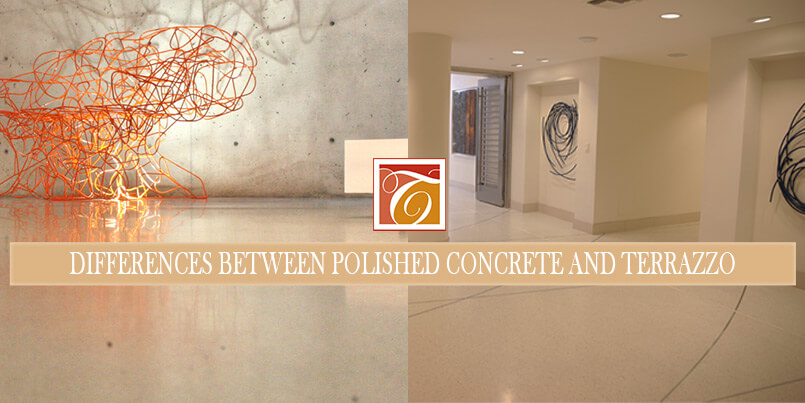
When determining the flooring for your next commercial project, there are many different options to choose from. Two recent trends in flooring are terrazzo and polished concrete, which are reliable flooring options in terms of durability, low maintenance, and sustainability. Although the two materials share similar features, it may be hard to distinguish one from another. TERRAZZCO® will highlight the main differences and provide a brief overview of each material.
Differences between terrazzo and polished concrete
One of the biggest differences between terrazzo and polished concrete will be the cement-to-aggregate ratio. Polished concrete will contain more cement whereas terrazzo will contain more aggregate. For example, cementitious terrazzo requires a minimum of 70 percent marble-chip material and a 30 percent cement matrix. On the other hand, polished concrete will have around 30 percent aggregate and 70 percent cement matrix.
Polished concrete originated out of terrazzo and polishing technology but mostly relies on chemical dyes and densifiers. Terrazzo was formed in the 15th century when Venetian mosaic workers used marble scraps to create flooring for their terraces. Another difference involves polishing. Polished concrete involves polishing the slab itself. In contrast, terrazzo involves covering the concrete slab with epoxy and aggregate, and then grind and polished to a finish.
Overview of Terrazzo
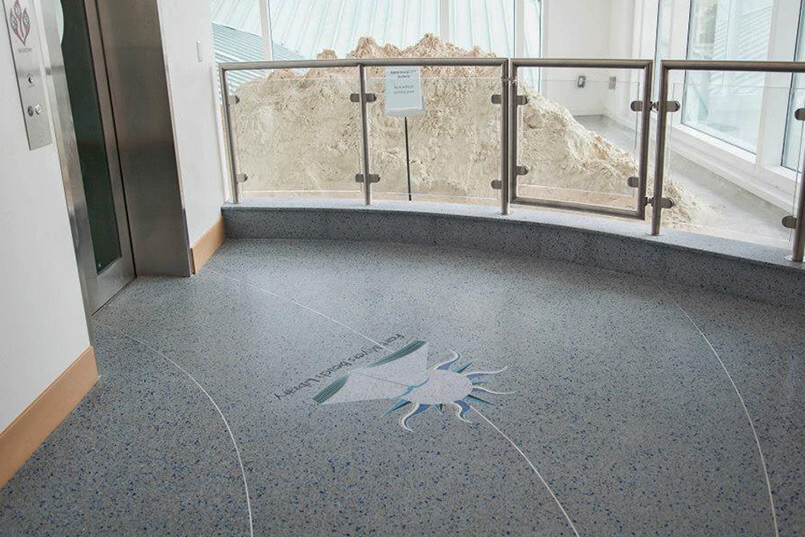
Today’s terrazzo is made with either Portland cement or epoxy for the base and then applied with a variety of aggregate, such as recycled glass or marble chips, to give off a speckled appearance. As of late, terrazzo has seen a resurgence in the architectural and design communities because it offers many great qualities in form and function. Terrazzo can create any design, giving designers the option to pick any color or decide to include an intricate logo design or pattern if they wish. Even today, terrazzo is expanding in its use. Going beyond flooring, terrazzo today is being transformed into useful household products and can be used as countertops and walls.
Terrazzo has a lasting impact on everyone. With zero VOC content, the material is quite “green” and offers architects an opportunity to qualify for LEED. The most important fact about terrazzo though is that it is the most cost-effective flooring option over the life span of the floor due to the floor’s durability and low maintenance costs.
Terrazzo can be used in any project, but most can be seen in schools, hospitals, government buildings, and corporate offices.
Overview of Polished Concrete
With either a new pour or an existing slab, polished concrete is highly polished to provide a highly durable and maintenance-free surface. Polished concrete can be optionally dyed to create a beautifully designed floor. Polished concrete is one of the most slip-resistant floors in the flooring market. In addition, polished concrete reflects well with daylights, which can help reduce electricity costs.
Like terrazzo, polished concrete can contribute to LEED points. There are no VOCs, making it an environmentally friendly product.
Polished concrete is commonly seen in warehouses, garages, commercial gyms, hospitals, and restaurants.
Concord Terrazzo Company is a terrazzo contractor. With TERRAZZCO® Brand Products, we offer innovative and environmentally-friendly terrazzo products to the world. For more information about terrazzo and its features, please reach out to us at info@terrazzco.com.