



16 Aug Most Asked Questions About Terrazzo



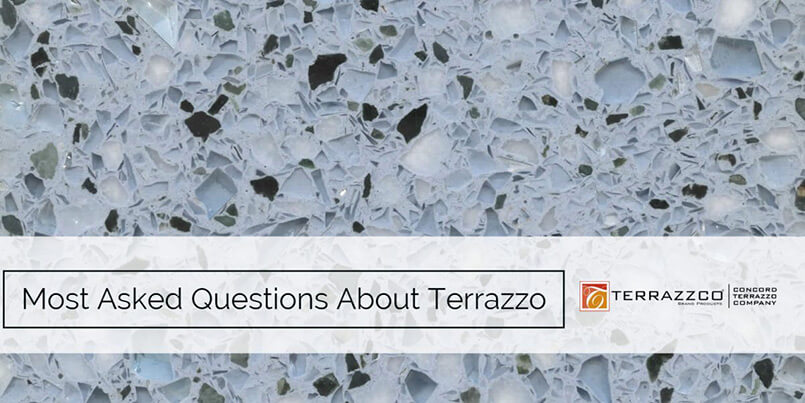
Most Asked Questions About Terrazzo
Terrazzo is a fascinating building material in today’s society, yet there are many questions about terrazzo such as what is it and what can it do. First introduced 500 years ago by Venetian marble workers as a way to reuse marble pieces, terrazzo was created as a way to create inexpensive flooring for patios and terraces. As terrazzo evolved over the centuries, designers are finding unique ways to create products with terrazzo.
Terrazzo often lasts over 75 years as the building material is nearly indestructible. However, most people recognize terrazzo for its design attributes. Today terrazzo consists of chips of marble, glass, and shells mixed with any color to create a beautiful floor with a speckled look. Today the cost and performance of terrazzo provide great value for building owners, general contractors, and architects looking to add the building material to their renovation and new construction projects.
For those who want to learn more about terrazzo and don’t know where to start, Concord Terrazzo Company came up with five of the most commonly asked questions about terrazzo from architects and designers.
1. Can You Use Epoxy Terrazzo Outdoors?
While terrazzo can be used outdoors, it is recommended that you select a rustic terrazzo system rather than an epoxy terrazzo system. Epoxy terrazzo is not ideal for outdoor use. Epoxy is sensitive to ultraviolet rays and has a thermal coefficient of expansion that is not ideal for exterior applications. However, with a rustic system, you can use terrazzo for exterior applications like pools, benches, patios, or stairs.
2. What is the customization of epoxy terrazzo?
When people ask us if there are any limitations when designing with epoxy terrazzo, the answer is no. Terrazzo is a unique option in the flooring industry, as it has tons of design potential. When you put pen to paper and draw something extraordinary, the same process applies to the terrazzo floor. The terrazzo floor acts as a blank canvas to let your imagination run wild.
Expansive Color Selection
-
- Epoxy terrazzo offers infinite color choices. In comparison to cement terrazzo, the colors are much more vibrant and will not fade away over the years.
Variety of Aggregates
-
- In addition to the color, designers have plenty of aggregate options to select. Marble is the traditional choice of aggregate in terrazzo, but new options were made possible when epoxy resins were introduced to the terrazzo industry in the 1970s. Aggregates including post-consumer recycled glass, porcelain, concrete, Mother of Pearl, plastic, and metal shavings join marble as chips to choose for a project. The design combinations are like no other flooring material. Architects and interior designers can test out their designs by ordering terrazzo samples.
Artwork and Logos
-
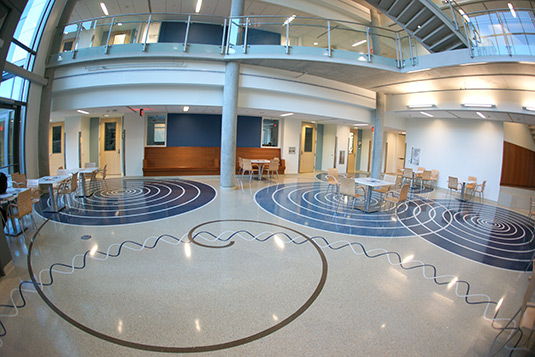
- Also, epoxy terrazzo allows for intricate logos and artwork to display anywhere in a building. But there is an opportunity to create a seamless one-color floor as well. Each style is beautiful and timeless over the years.
Terrazzo is widely known as a flooring system, but it can be customized for countertops, stairs, backsplashes, and shower stalls. Even designers are testing out and finding new ways to use terrazzo. Today you can see people creating products like lamps, furniture, and artwork all made with terrazzo.
3. Is Terrazzo Slippery?
There are many claims that terrazzo is slippery. The surface of the terrazzo is not slippery at all. But certain sealers and coatings can cause a terrazzo floor to feel slippery. Therefore, it is recommended that only slip-resistant products be used with a terrazzo floor. Everyone should refer to a manufacturer’s instructions prior to use. Avoid wax products as well.
4. Where can I use terrazzo?
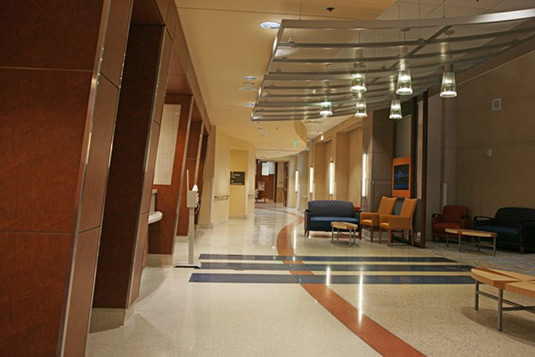
Essentially terrazzo is for use just about anywhere, for both indoor and outdoor applications. Terrazzo is ideal for areas with high levels of foot traffic such as universities, airports, and malls. For areas that require sanitary standards and easy-to-clean floors, terrazzo is ideal for healthcare facilities, any commercial bathroom, and restaurants as terrazzo do not support the growth of bacteria, mold, and mildew. Terrazzo is great for places that require a high-end finish with reduced noise levels such as corporate office lobbies, government buildings, and hospitality settings. Or terrazzo can add a bit of flair to its custom design logos for places like sports stadiums, retail stores, and major fun and recreational city attractions.
There’s plenty of places to include terrazzo, and terrazzo offers many benefits to these places including durability, low maintenance, aesthetics, design flexibility, and sustainable features.
5. How much does terrazzo cost?
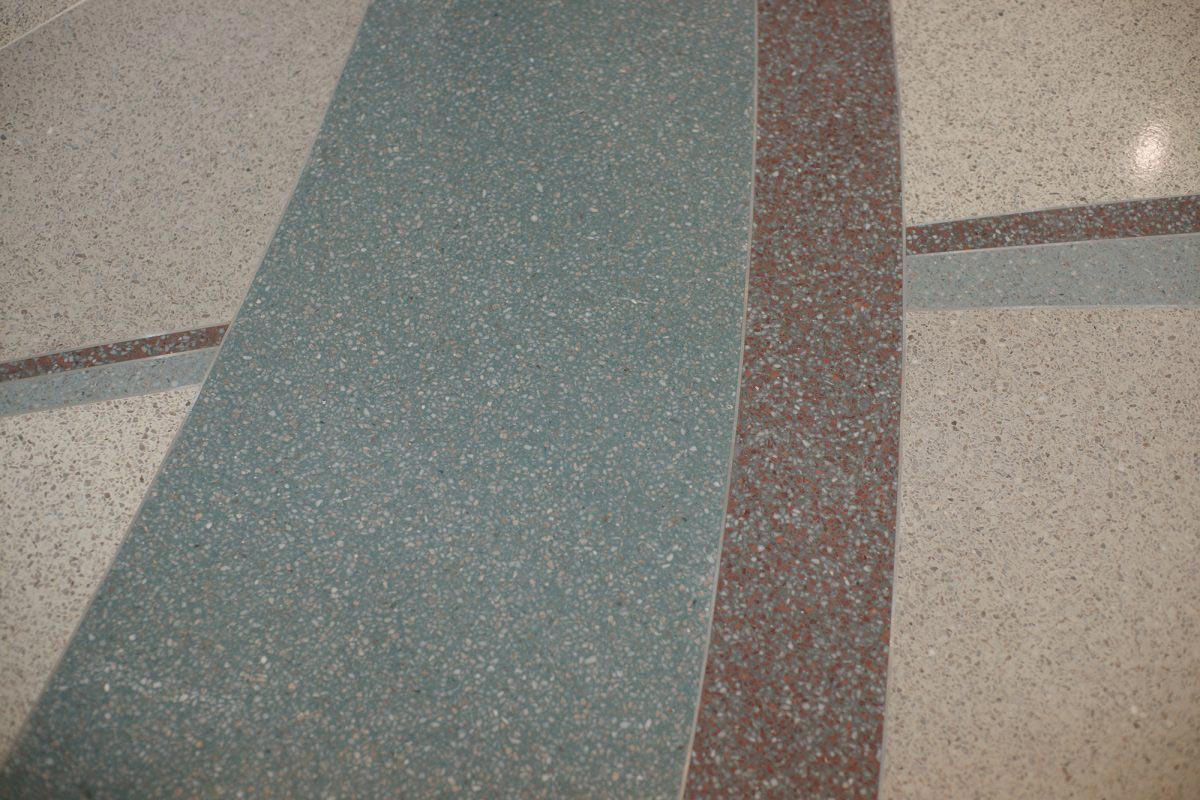
One of the most commonly asked questions about terrazzo is cost. People think terrazzo is expensive. Bear in mind that terrazzo was created in the 15th century as a way to create inexpensive flooring. Yes, terrazzo is long-lasting that comes with high initial installation costs; however, thin-set epoxy terrazzo, in particular, has the lowest lifecycle cost of any flooring material. When considering lifetime maintenance and replacement costs, other flooring materials simply can’t match the durability, low maintenance, and design customization terrazzo offers.
With that said, pricing for terrazzo will vary from project to project. The cost of installations varies depending on the region you are in so consult a local contractor to get an accurate price quote. But there are other cost factors to consider.
Cost Factors
Project Size:
Many project quotes are based on cost per square footage. Therefore, installing terrazzo throughout an entire school would cost more than installing terrazzo for an office lobby for instance. The larger the space, the more terrazzo flooring installation costs.
Materials
Also consider the materials that you want to use to go into a terrazzo floor. Consider the aggregates. There are hundreds of aggregates to choose from such as glass and marble; however, you should ask your local terrazzo contractor which chips can help lower your overall costs. Also size matters. Venetian-style terrazzo chips (sizes #3 through #8) will raise the price. Other materials to consider include the choice of divider strips (aluminum and brass vary in prices too!).
Design Options:
With epoxy terrazzo introduced in the 1970s, now you can select many colors for your projects. More colors lead to a higher price. Also, projects that have artistic designs, which tend to use several epoxy colors, or incorporate a logo will see higher costs.
Grit Level:
Grit levels add to the shine of the terrazzo floor. The standard grit level for a terrazzo floor is 120 grit. The higher the grit level, the higher the costs as well.
Type of Installation:
Consider labor costs as well. Cement terrazzo installation takes up to four to five times longer than epoxy terrazzo and is more labor-intensive. On the other hand, those seeking to include terrazzo for their projects can take a look into precast terrazzo, which is manufactured and cured at a contractor’s location and then shipped to a construction site for installment. This is an option in lowering overall pricing.
Great Price Value Longterm
With all design features in consideration, terrazzo is a one-of-a-kind flooring type that still comes out to be relatively inexpensive in comparison to other flooring materials. If you are looking for a long-term floor, then terrazzo provides great value. Architects and designers can create a custom floor to meets their design needs. Design flexibility is limitless. As always, a terrazzo contractor can help anyone select materials that fall into their price range.
About Concord Terrazzo Company
Concord Terrazzo Company is a leading manufacturer and supplier of terrazzo materials, distributing TERRAZZCO Brand Products to projects all around the world. Precast terrazzo, aggregates, and epoxy resin products fall under the umbrella of TERRAZZCO Brand Products, which Concord Terrazzo Company manufactures at our headquarters in Charlotte, North Carolina. We are a single-source supplier using green techniques throughout the production and distribution of TERRAZZCO Brand Products.