


04 May 3 Reasons Terrazzo Should be Your Sustainable Flooring Choice

3 Reasons Terrazzo Should Be Your Sustainable Flooring Choice
Is Terrazzo A Sustainable Flooring Choice?
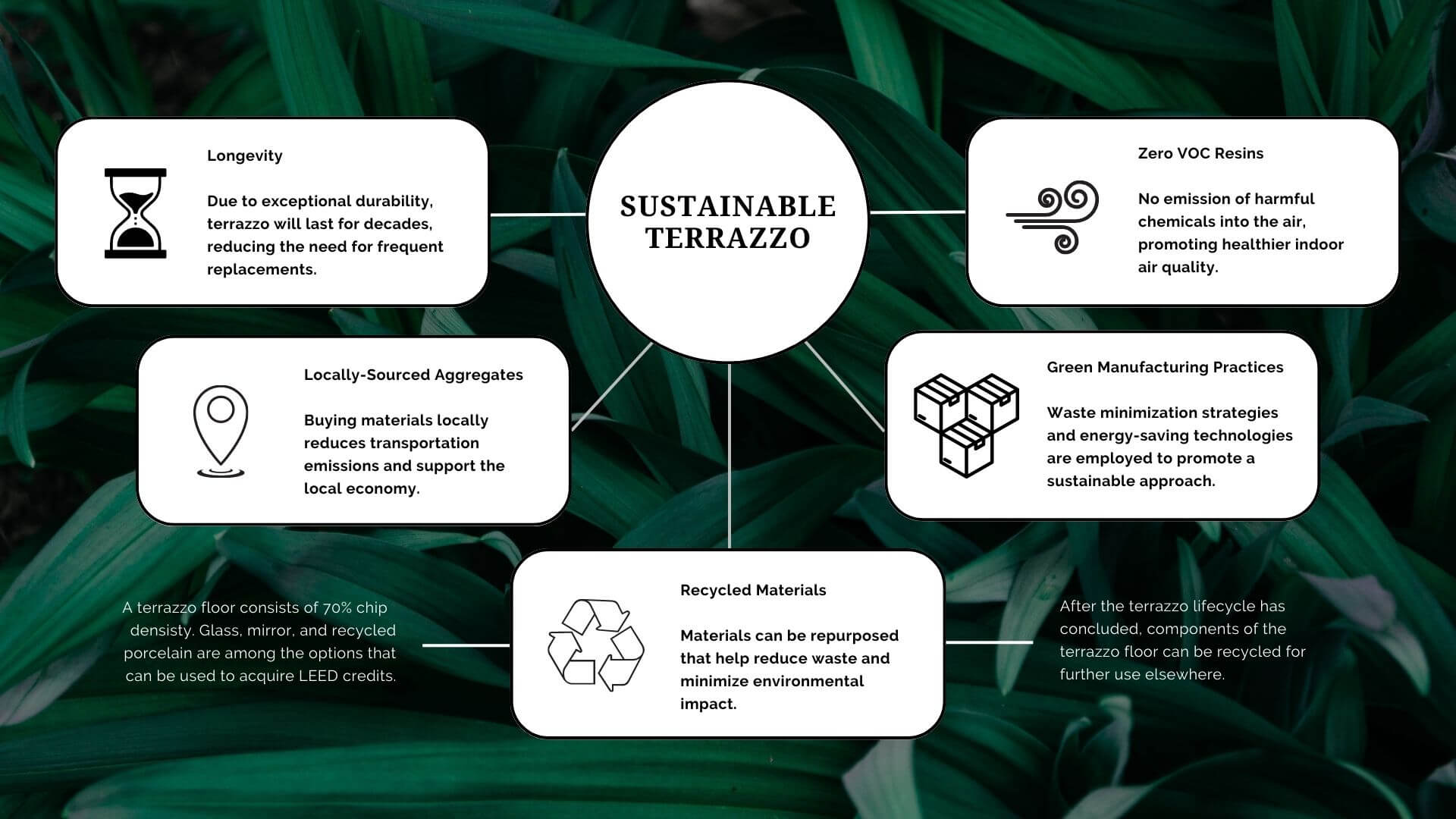
Terrazzo is one of the most sustainable commercial flooring systems available. It is made with recycled aggregates, zero-VOC resins, and lasts the lifetime of a building. This longevity significantly reduces the need for replacement, minimizing both material waste and environmental impact associated with repeated life cycles.
The US Green Building Council, or USGBC, has made it particularly easy for us to determine whether or not something is a sustainable and eco-friendly option: they’ve established a clear framework through its “LEED Standards.” According to the USGBC website, LEED stands for Leadership in Energy & Environmental Design, and it is a “certification program that recognizes building strategies and practices” that meet certain prerequisites, thus deeming them sustainable. Projects earn points based on the standards they achieve; the higher the score, the greater the level of sustainability and environmental performance.
Within this framework, terrazzo systems, such as those offered by TERRAZZCO, can support green building initiatives. Epoxy terrazzo systems contribute to LEED certification through their zero-VOC composition, and can earn credits related to indoor air quality, material selection, and recycled contents. For architects and specifiers seeking environmentally responsible materials, terrazzo presents a durable, low-impact solution aligned with today’s sustainability standards.

Why Sustainability Matters for Commercial Flooring Specifications Today
Sustainability is no longer a project preference; it is a specification requirement in a growing number of commercial and institutional projects.
The global green building materials market reached $337 billion in 2024 and is projected to reach $734 billion by 2033, driven by LEED mandates, ESG commitments from building owners, and government infrastructure programs prioritizing low-carbon materials.
Green buildings report nearly 20% low maintenance costs than typical commercial buildings, and LEED-certified buildings produce 34% lower CO2 emissions than traditional buildings. Flooring specification is one of the materials that architects, designers, and facility managers must consider to factor in long-term environmental and operational goals.
3 Reasons that Make Terrazzo Environmentally Sustainable
Terrazzo earns its sustainability credentials across three core measurables: material composition, lifecycle performance, and indoor environmental quality.
1. Recycled Materials
Terrazzo aggregates are a primary source of recycled content. Points toward LEED certification can be awarded for projects utilizing recycled materials, not just “natural” ones. TERRAZZCO supplies post-consumer recycled glass from mirrors, glass bottles, and glass containers, and post-industrial marble and granite chips from quarry operations. Using recycled aggregates directly contributes to LEED Materials and Resources credits when sourced within 500 miles of a project site.
And we can’t forget about those divider strips — its metals come from post-industrial sources as well.
2. Zero VOCs & Indoor Air Quality
Projects may earn LEED credits when flooring installations utilize materials that do not emit VOCs, or Volatile Organic Compounds, at or above a certain level. To verify compliance, terrazzo installers should be able to provide certification confirming that their materials meet these requirements. Such documentation reflects rigorous product testing and supports verified sustainability claims. In addition, low or zero-VOC materials contribute to improved air quality, an important consideration for occupant health and comfort.
Epoxy terrazzo further enhances indoor environments due to its non-porous composition. It does not support the growth of bacteria, mold, or mildew, making it a high-performance choice for healthcare, education, and educational environments where occupant health is a primary specification driver.
Note: As of September 2018, TERRAZZCO Brand Products is GREENGUARD certified. That’s great news when the time comes for you to select materials for your sustainable flooring projects!
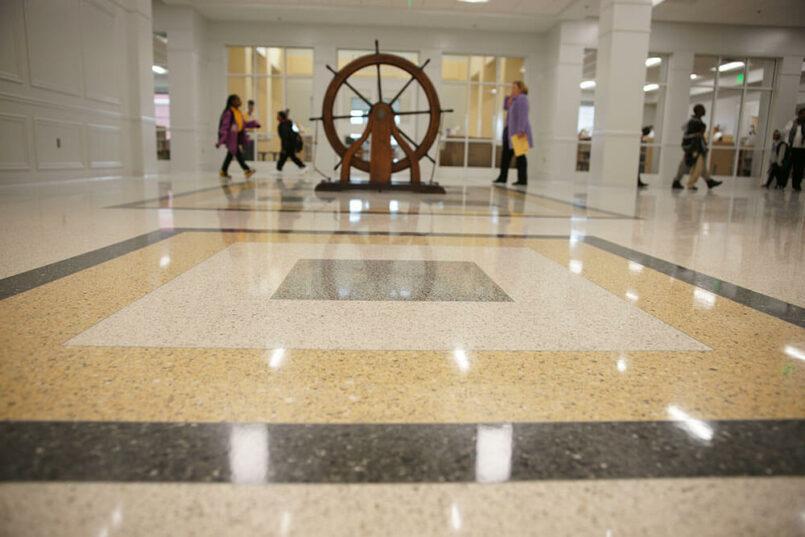
3. Lifecycle Durability – Terrazzo’s Biggest Sustainable Advantage
Epoxy terrazzo lasts the lifetime of any building structure. Once installed, it never needs replacing. That permanence is terrazzo’s single most significant sustainability attribute.
Most commercial flooring systems require replacement every 10-20 years. These replacement cycles generate landfill waste, consume virgin materials, and produce emissions. A terrazzo floor installed today can outlast these commercial flooring systems with a lifespan of 40+ to over 100 years.
LEED projects have diverted more than 80 million tons of waste from landfills, and terrazzo’s permanent lifespan is a clear path to preserving the planet and designing better buildings.

Going Green with Terrazzo
Download “Going Green with Terrazzo”. See why terrazzo is one of the most eco-friendly flooring options today. Understand more about how terrazzo contributes to LEED points for sustainable building projects.
How Does Terrazzo Compare to Other Sustainable Flooring Options?
| Flooring Typet | Lifespan | VOC Contents | Replacements over 75 Years |
|---|---|---|---|
| Epoxy Terrazzo | 40-100+ Years | Zero | 0 Times |
| LVT | 10-20 Years | Low-Moderate | 3-7 Times |
| Carpet | 7-15 Years | Varies | 5-10 Times |
| Ceramic Tile | 20-30 Yeaars/td> | Zero | 2-3 Times |
Every replacement cycle for competing flooring materials generates landfill waste, carbon emissions from manufacturing and transportation, and labor disruption in buildings. Terrazzo eliminates it all.
How Does Terrazzo Support ESG and Green Building Goals?
Facility managers and building owners with ESG commitments need flooring materials that deliver documented, verifiable environmental performance.
Terrazzo provides documentation through:
- Health Product Declarations (HPD): transparent ingredient disclosure
- Regional sourcing records: Aggregate origin documentation for LEED credits
- Zero VOC certifications: verifiable indoor quality performance
- Permanent lifecycle data: no replacement waste over the building’s lifespan.
Next time you’re worried about the sustainability of your project–and more specifically, that of the materials you’re using–take a peek back at this list. Remember: synthetic does not mean unsustainable! So there you have it: 3 reasons terrazzo should be your sustainable flooring choice.