



11 Jan Designing Terrazzo with Mother of Pearl



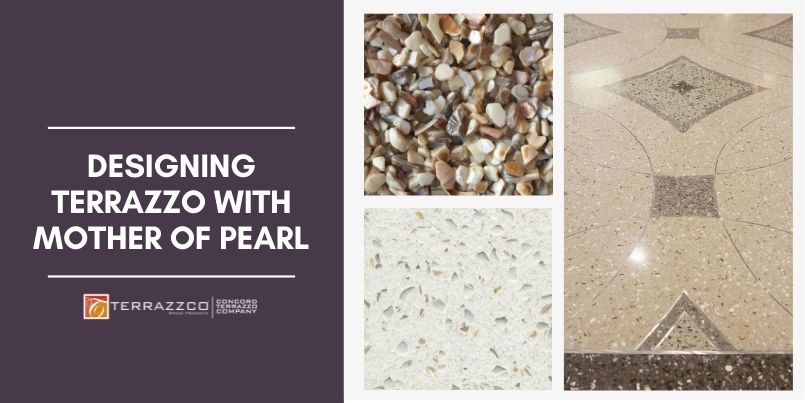
Mother of Pearl Design in Terrazzo
Terrazzo is a composite material mainly consisting of marble or glass chips and is mixed in either an epoxy or cementitious binder. Mother of Pearl is the most popular shell chip to use in terrazzo. In this blog, Concord Terrazzo Company will cover:
- How Mother of Pearl gets its name
- How architects and designers can use Mother of Pearl in modern terrazzo designs
- And how Mother of Pearl has impacted many industries over history.
Why is it called Mother of Pearl?
Mother of Pearl, also known as nacre, is a hard iridescent substance forming the inner layer of a mollusk shell. It gets its name based on the shell’s protection of its pearls similar to how a “mother” would protect and nurture her “children.” For instance, if an intruder enters the shell, the shell in return protects itself by coating that substance with the same material used to create the pearl. Furthermore, the material is strong, resilient, and shimmery and is commonly used for decorative purposes.
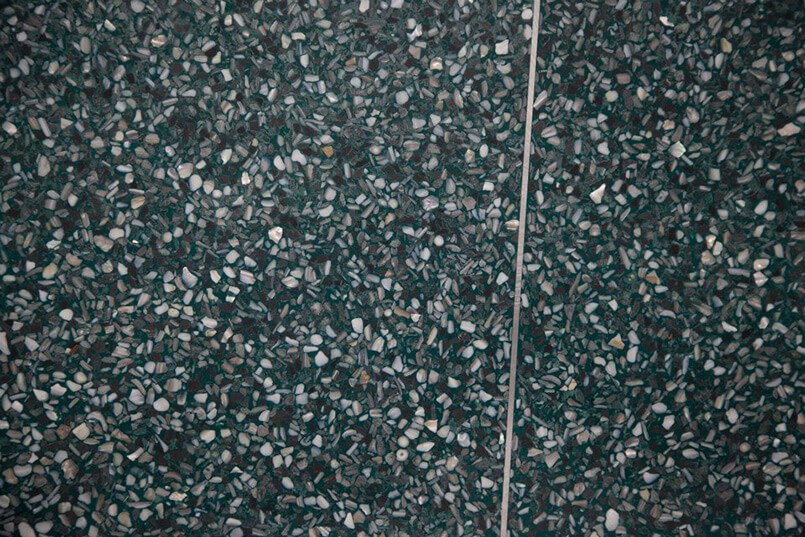
Mother of Pearl Terrazzo Design
Terrazzo Chips
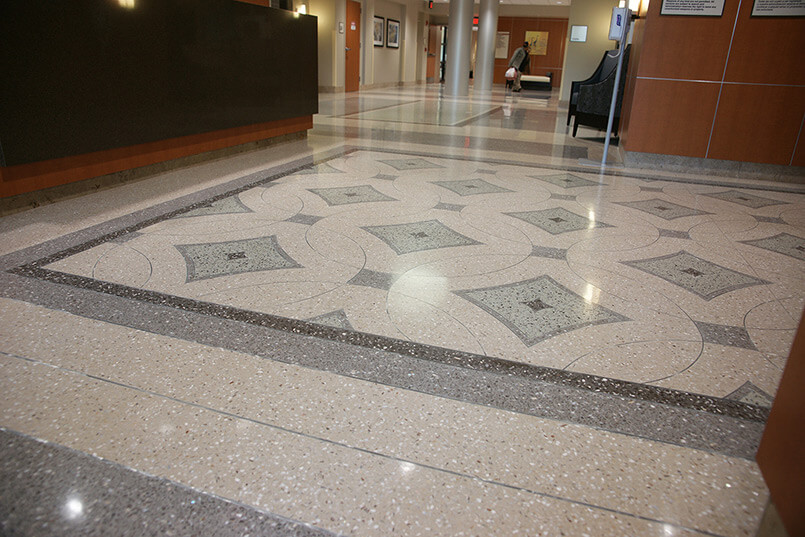
In architecture, these shells were cut into shapes to create mosaics for floors, walls, and ceilings. The same can be applied to terrazzo using Mother of Pearl chips in poured-in-place applications to create remarkable floors or in precast to create beautiful countertop, shower, and stair products.
The chip is highly desired for its luster. The material’s sheen is contributed by wavelengths of light scattered and refracted back towards the user. Mother of Pearl can come in either white or black. At Concord Terrazzo Company, our two most popular shell aggregates are Classic Mother of Pearl and Freshwater Mother of Pearl.

Freshwater Mother of Pearl (Pictured Left); Classic Mother of Pearl (Pictured Right)
Mother of Pearl is easily accessible and abundant, showing up on shores around the world. This makes the shell a great substitute for traditional terrazzo chips in regards to preserving the Earth’s natural resources while offering a decorative material for use. Like marble and glass chips, Mother of Pearl is graded by different aggregate sizes. However, the unit of measurement is by millimeters for shell aggregates. The standard size #2 chip is graded at 9-12 mm, size #1 at 3-6 mm, and size #0 at 1-3 mm. For more general information on the Mother of Pearl, we recommend downloading our product data sheet.
Download Mother of Pearl Product Data Sheets: Download PDF
Because terrazzo has limitless design options, it is easy to mix and match a Mother of Pearl design with other marble and recycled glass chips to find the best fit for your terrazzo project needs.
History of Mother of Pearl and Its Impact on Earlier Societies
Terrazzo was created in the 15th century by Venetian construction workers reusing scraps of marble to create inexpensive flooring. Mother of Pearl predates that period with records showing the existence of these shells during the Bronze Age (6,000 to 3,000 B.C.E.). With the accessibility for these shells, craftsmen used this material for decorative and ritual purposes developing items such as tools, jewelry, and ceremonial pieces.
By the 17th century, Mother of Pearl was popular for making buttons. As a result, the button industry surged across Europe during this period. Elsewhere, the Ottoman Turks used the shell as an inlay for architectural pieces such as chests and furniture.
The shell even served a different purpose in China. The shell was seen as a symbol of imagination, heightened senses, and faith. In particular, it was often worn by children as a source of protection and was even used as a source of healing to help improve vision, lower high blood pressure, cure dizziness, and speed up the healing of wounds.
Conclusion
Mother of Pearl is an aggregate that can add elegance to any terrazzo project, creating one-of-a-kind terrazzo floors, walls, or countertops. If Mother of Pearl design intrigues you, then we recommend requesting a sample. For all inquiries on our TERRAZZCO Brand shell chips, contact Concord Terrazzo Company at info@terrazzco.com or complete our online form.
Sources: Wikipedia; American Museum of Natural History; thespruce.com
Follow Us on Social Media:


